In our Year in Review, we closed with a section that sparked the most conversations: our outlook for 2026.
The signals emerging across governments, enterprises, telecoms and AI ecosystems all point in the same direction. 2026 is shaping up to be a defining year for digital identity.
In this article, we will go through the trends we are seeing across the industry. These are the shifts that are starting quietly now but will shape how identity, trust and digital interactions evolve over the next 12 months.
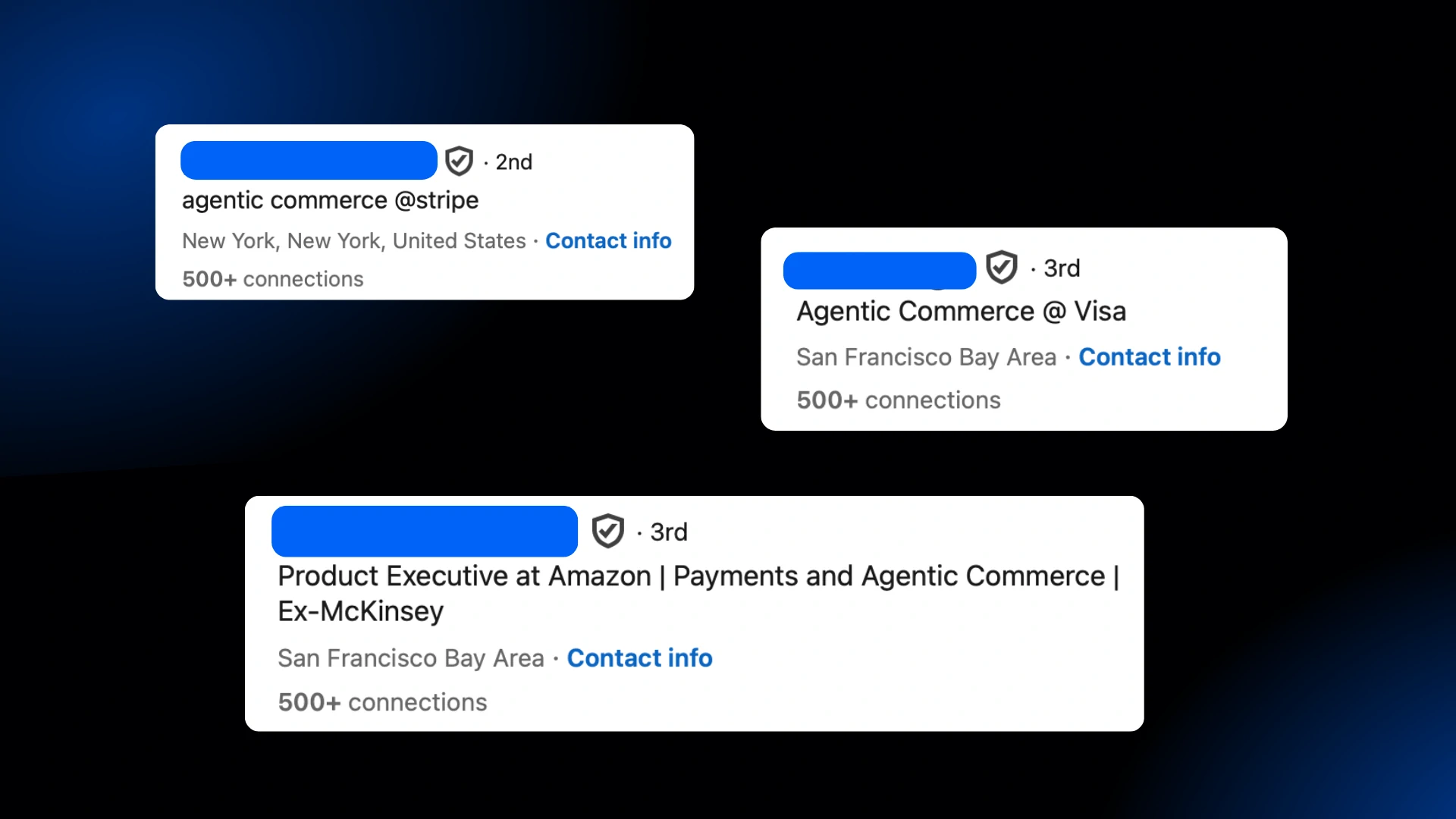
Agentic Commerce Moves from Concept to Production
Autonomous agents will start to participate in real economic activity. They will research products, negotiate purchases and execute transactions on behalf of users and organizations.
For this to work at scale, AI agent identity will become essential. Agents will need a verifiable way to prove who they are, who they represent and what authority they have. Without this, there is no safe way to trust an agent with money, access or decision-making.
As agentic commerce grows, identity will become the control layer that brings confidence, delegation, auditing and accountability to machine-driven interactions. What feels like an emerging concept today is already moving into practical implementation across several industries.
Telecoms Become Identity Providers
Telecoms will quietly become some of the most influential identity providers in the world. Their proximity to end users and their verification capabilities will give them a natural advantage.
We are already seeing this shift play out in practice. Our pilot with Telefónica, GSMA and TMT ID showed how to replace knowledge-based auth and OTPs with a biometric check through a mobile app. This approach allows callers to authenticate in seconds, dramatically reducing call handling time while also improving security and minimizing data exposure for both customers and agents.
As fraud pressure increases and authentication moves closer to the network layer, telecoms will play a central role in delivering identity-based security at scale. This is one of the clearest patterns we expect to accelerate in 2026.
Organizational ID and the Rise of Reusable Business Identity
Most conversations about digital identity still focus on individuals, but one of the biggest shifts we are seeing is happening at the organizational level. Traditional business verification is still slow and repetitive, requiring the same checks and friction.
Reusable business identity changes this entirely.
Once an organization completes a full verification, it can receive a set of verifiable business credentials that can be reused across platforms, partners and services. This dramatically reduces onboarding time while improving auditability, compliance and trust.
This is not theoretical. The EU will soon launch the EU Business Wallet, giving companies legally recognized digital credentials that can be reused across the European Single Market. It is one of the strongest signals that organizational identity is becoming formal infrastructure, not a niche idea.
Although we cannot yet share details, we are already involved in a major enterprise initiative in this space. The demand is clear. Businesses want the same benefits consumers get from reusable digital ID, but applied to corporate onboarding, B2B trust and cross-platform operations.
We expect reusable business identity to become a foundational identity layer in 2026 and beyond.
Payments and Identity Begin to Merge
Recent EU Digital Identity Wallet pilots suggest that embedding verified identity directly into payment flows reduces fraud and removes friction. In 2026, this pattern will accelerate as identity becomes a built-in part of the transaction itself.
The payment moment will increasingly become an identity moment, where trust is established automatically and users complete transactions faster and more securely.
The Year of Delegation
Delegated authority is about to move from a niche feature to a standard expectation. Organizations will begin to assign verifiable permissions to employees, partners and autonomous systems, making it possible for roles, responsibilities and access rights to travel with the individual or agent wherever they operate.
This shift matters because manual access approvals, one-off permission checks and brittle role-based systems cannot keep up with the speed of modern workflows. Verifiable delegation creates operating models that are far more dynamic, auditable and secure. It also prepares companies for a world where both humans and AI agents need clear, trustworthy authority to act.
From Digital ID to Digital Operating Layer
We are beginning to see a fundamental shift in how organizations think about identity. It is no longer just about access control or compliance. Identity is becoming the operating layer that coordinates how digital ecosystems interact, transact and prove legitimacy.
This spans everything from onboarding and compliance to autonomous agents and cross-border services. Identity is turning into the connective tissue that determines how trust flows across systems.
In 2026, the question for organizations will not be whether to adopt digital identity, but how strategically and how fast. The companies that treat identity as core infrastructure, rather than a checkbox, will be the ones shaping the next phase of digital trust.